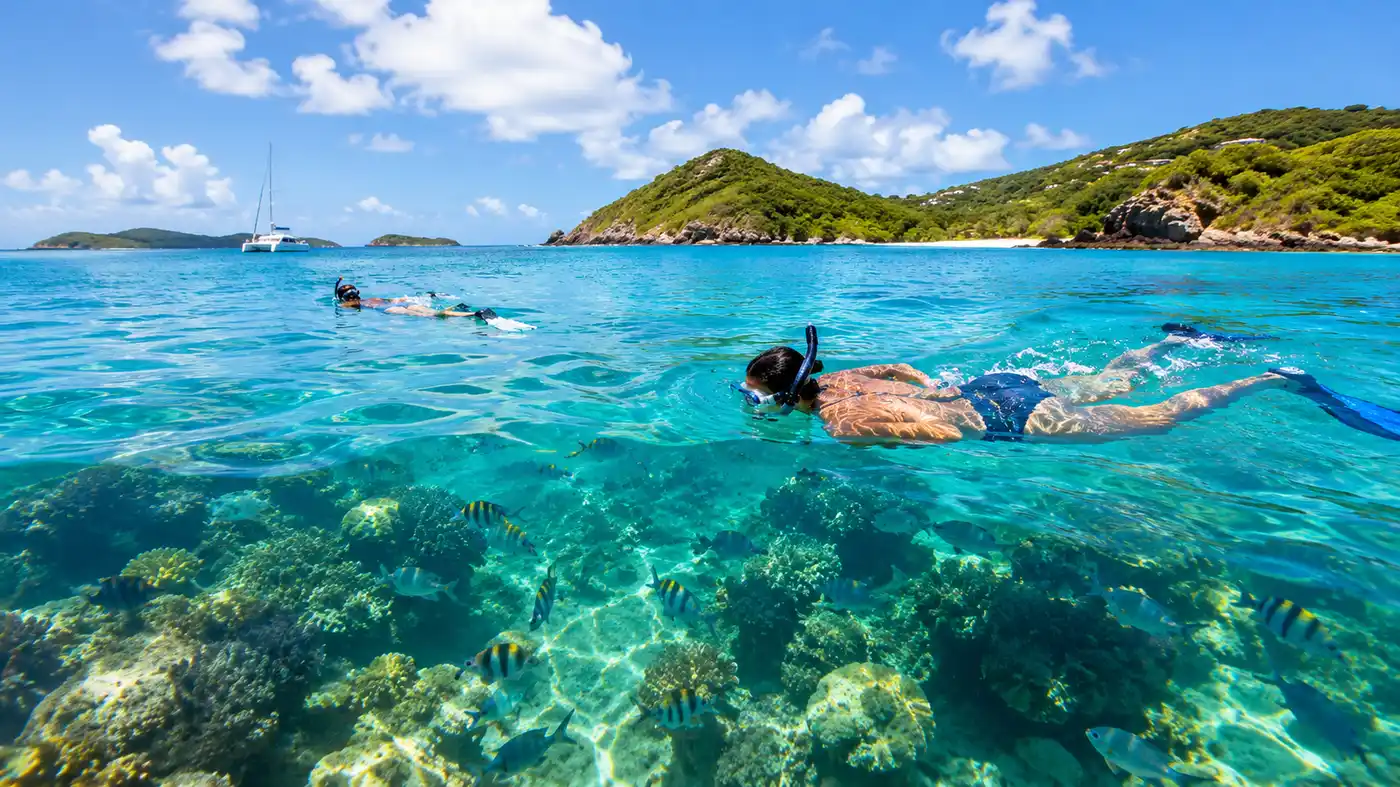
Best Time to Snorkel in St Thomas Weather Water Temp
Most people will tell you that winter is paradise in the Virgin Islands, and they are not entirely wrong if your only goal is escaping a blizzard. If you came to spend half your day with your face buried in the water watching tangs graze on brain coral, the real answer is more complicated. Figuring out the best time to snorkel in st thomas comes down to balancing water clarity, winter swells that churn the north-facing bays into washing machines, and water temps that swing between refreshing and bathwater warm.
I learned this the hard way on my second trip down. I showed up in late January expecting glassy coves everywhere, only to find six-foot rollers crashing into Magens Bay and pushing sand so thick you could not see your own fins. After years of hopping between Charlotte Amalie and the outer cays across different months, I look at the calendar through a completely different lens. Here is how the island changes throughout the year, what the ocean feels like beneath the surface, and how to line up your trip for the clearest water possible.
Book your snorkeling in st thomas experience:
Seasonal Swells and the Best Time to Snorkel in St Thomas
The Caribbean has two distinct underwater seasons, and they do not line up with the tourist calendar. High season for tourists runs from December through April. The weather on land is dry, trade winds blow reliably around 15 knots, and humidity drops enough that you can sit outside at noon without sweating through your shirt. For snorkelers, these months bring Atlantic groundswells generated by winter storms thousands of miles north.
When those swells roll in, north-facing beaches take the brunt of the impact. Coki Point Beach can go from clear to hazy in two hours, while Hull Bay turns into a legitimate surf break. If you visit in January, you have to stay nimble. You might get three days of pool-like conditions followed by four days where you need to retreat strictly to protected south-shore bays like Secret Harbour or Brewers Bay to escape the surge. When is the best time to snorkel without worrying about heavy surf? May through July.
Late spring through mid-summer brings calmer ocean conditions. Wind dies down, ocean swells flatten out, and visibility routinely opens up to 70 or 80 feet. July gets a bad rap because people worry about tropical weather, but early summer delivers some of the flattest, clearest seas of the entire year. If you want glass-calm water across every single reef on the island, late spring and early summer win hands down.
Pro tip: Check the NOAA marine forecast for the Virgin Islands every morning instead of the standard weather app. Look specifically at swell height and wave period; anything over 4 feet on a 10-second period means north-facing reefs will be washed out with suspended sand.
St Thomas Water Temperature by Month and Ocean Conditions
You can snorkel without a wetsuit every single day of the year in St Thomas. The water temperature in St Thomas stays within a narrow six-degree band, but your body definitely notices the difference between the winter dip and late-summer peak. Water temp in St Thomas bottoms out in February at roughly 78 to 79 degrees Fahrenheit. It sounds warm on paper, yet after 45 minutes floating over a reef with the trade winds blowing across your wet back, you will find yourself shivering.
By September and October, st thomas water temp climbs to 84 or 85 degrees. The ocean feels like a tepid bath, which makes long sessions over outer reefs effortless because your core never drops. The downside to those bathtub temperatures is that late summer coincides with peak tropical storm activity and occasional algae blooms that can dull visibility after heavy downpours.
| Month | Average Water Temp | Average Air High | Rainfall (Inches) | Typical Visibility |
|---|---|---|---|---|
| January | 79°F (26°C) | 85°F | 1.9 | 40 - 60 ft |
| February | 78°F (25.5°C) | 85°F | 1.5 | 40 - 60 ft |
| March | 79°F (26°C) | 86°F | 1.4 | 50 - 70 ft |
| April | 80°F (26.7°C) | 86°F | 2.1 | 60 - 75 ft |
| May | 82°F (27.8°C) | 87°F | 3.1 | 65 - 80 ft |
| June | 83°F (28.3°C) | 89°F | 2.4 | 70 - 85 ft |
| July | 83°F (28.3°C) | 90°F | 2.8 | 65 - 80 ft |
| August | 84°F (28.9°C) | 90°F | 3.7 | 60 - 75 ft |
| September | 85°F (29.4°C) | 89°F | 5.5 | 45 - 65 ft |
| October | 84°F (28.9°C) | 88°F | 5.3 | 45 - 65 ft |
| November | 82°F (27.8°C) | 87°F | 5.2 | 50 - 65 ft |
| December | 80°F (26.7°C) | 86°F | 2.9 | 45 - 60 ft |
The water temperature in St Thomas in December hovers around 80 degrees, while water temperature in St Thomas in January usually slips down to 79. If you plan to spend two hours in the water during those months, a 1mm neoprene top or thermal rash guard is well worth the luggage space. In June or July, boardshorts and standard rash guards are all you need.
Daily Timing: When is the Best Time to Snorkel for Clear Water?
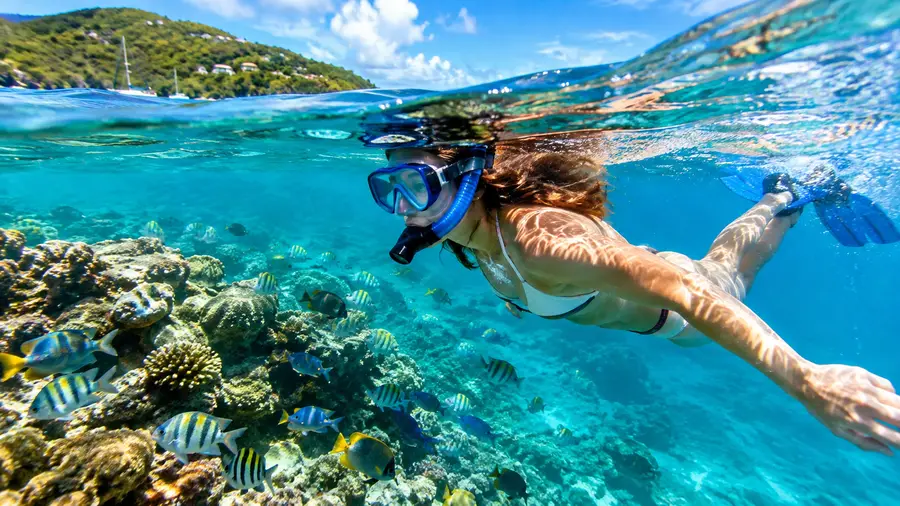
Season matters, but time of day dictates whether you have an unforgettable snorkel or an average one. The golden window for snorkeling on St Thomas is almost always between 7:30 AM and 10:30 AM. During these three hours, the surface wind is barely a whisper, the sun sits high enough to illuminate the reef crevices without glaring directly back into your mask, and boat traffic has not kicked up bottom sediment.
By midday, two things happen that degrade conditions. First, the afternoon sea breeze ramps up to 15 or 18 knots, creating surface chop that makes breathing through a tube irritating and tilts the coral into moving shadows. Second, the cruise ship passengers arrive by the busload. Popular spots become crowded fast, and dozens of people walking through shallow sandbars near shore will turn clear green shallows into cloudy soup within thirty minutes.
Late afternoons can work well on west-facing spots if the wind dies back down around 4:00 PM. The light turns amber, pelicans start diving hard around the rocky points, and predatory fish like tarpon and bar jacks move into the shallows to hunt. Keep in mind that twilight reduces visibility quickly, and stingrays blend so thoroughly into the bottom sand that you need sharp eyes to spot them before you step down.
Note: Cruise ship schedules have a massive impact on shore visibility. If three mega-ships are docked at Crown Bay and Havensight, avoid Coki Beach until late afternoon; look up the daily port schedule and pick less accessible bays instead.
Book your snorkeling in st thomas experience:
Top Spots by Season: Finding the Best Beach for Snorkeling in St Thomas
No single spot holds the title of best snorkeling beach in st thomas all twelve months because local wave exposure shifts so dramatically. A beach that looks like glass in June can be unswimmable in February. If you understand the island geography, you will never get skunked.
On the east and north sides, spots like Sapphire Beach offer sweeping coral structures and drop-offs where eagle rays love to glide. Sapphire handles wind relatively well because the outer reefs absorb the biggest breaks, but you need decent fin strength when the current moves through the cut between St Thomas and St John. Further west, Coki Point Beach provides shallow, easy access packed with yellowtail snapper and trumpetfish, though it catches any north swell dead-on during winter storms.
For guaranteed flat conditions during windy or rough periods, head south. Brewers Bay st thomas snorkeling is unmatched for encounters with green sea turtles and southern stingrays grazing in the extensive seagrass beds. It sits tucked behind airport hills, sheltered from northern rollers. If you want to know where to swim with sea turtles in St Thomas, Brewers Bay and nearby Lindquist Beach are top tier, though Lindquist charges an entry fee of around $5 per non-resident plus parking.
When selecting your location based on current weather, keep these strategic rules in mind:
- North swell running: head straight to Secret Harbour or Brewers Bay on the south coast, where high cliffs and southern exposure keep the water flat.
- Strong easterly trade winds: tuck into Magens Bay st thomas snorkeling territory along the far right-hand rocky point, which is heavily sheltered from east winds even if the center beach is breezy.
- Dead-calm summer days: rent a vehicle and head straight to outer reefs along the northeast coast to take advantage of rarely accessible patch reefs without chop.
- Low tide mornings: stick to deeper drop-offs like Sapphire to avoid scraping knees or fins against shallow elkhorn coral heads.
Magens Bay gets dismissed by snorkel purists because the vast majority of the bay is sand. That is mostly fair, but if you hike down the rocky edges on the western point when the water is clear, you will see juvenile nurse sharks resting under ledges. It is definitely not the best snorkeling beach st thomas has to offer, but it works fine for beginners who need zero waves to feel comfortable.
Hurricane Season and Summer Snorkeling: Is July a Good Time to Go to St Thomas?
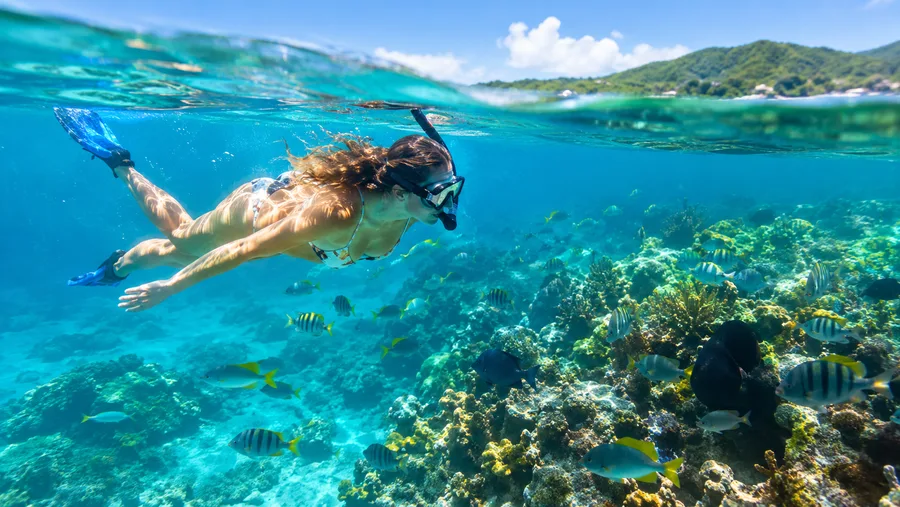
Travelers constantly ask me: is july a good time to go to st thomas? The simple answer is yes, with minor caveats. July is technically inside the Atlantic hurricane season, but severe systems rarely ramp up until mid-August and September. In July, you get low crowds, cheaper rental villas, and some of the warmest water temp st thomas sees all year, hovering right at 83 degrees.
St Thomas in July feels distinctly slower than it does during the chaotic winter rush. You can pull into parking lots at 10:00 AM and still snag a shaded spot under a sea grape tree. The morning water is glassy, making it a fantastic month for both casual snorkling st thomas trips and deeper scuba diving in st thomas around Cow and Calf rocks. The main trade-off is air temperature; afternoon highs sit right at 90 degrees with heavy humidity, so you will want to spend most of your waking hours submerged anyway.
August and September carry real weather risks. Tropical waves roll through every three to five days, bringing cloud bursts and occasional gale-force gusts that can muddy the bays for 48 hours straight. If you travel during these months, buy good travel insurance and stay flexible with your beach days. Here is what to pack if you plan on snorkeling during summer or shoulder season:
- Full-sleeve UV rash guard: prevents harsh sunburn during long mid-day floats without needing oily sunscreens that damage the delicate coral heads.
- Streamlined travel fins: open-heel fins with soft neoprene socks give you the thrust needed to navigate outer reef edges safely.
- Defog solution: summer humidity means your mask will fog within three minutes unless you treat it before entering the water.
- Mesh gear bag: lets your gear drain and dry quickly between morning and afternoon bay hops instead of souring in a hot rental car.
Even when a brief summer squall dumps rain for 20 minutes, the storm usually passes quickly, leaving the ocean smooth again shortly after. Rain itself does not wreck visibility unless it creates heavy runoff from steep hillside roads near dirt construction sites.
Frequently Asked Questions about best time to snorkel in st thomas
What month has the clearest water for snorkeling in St Thomas?
May and June typically offer the clearest water across the island. The winter Atlantic groundswells have ended, seasonal trade winds drop significantly, and the heavy rainfall of late summer has not yet arrived, leading to consistent underwater visibility between 70 and 85 feet.
Is the water cold in St Thomas during the winter?
The water is not freezing, but it drops to its lowest levels of roughly 78 to 79 degrees Fahrenheit in January and February. While pleasant for a brief swim, floating motionless on the surface for over an hour can leave you feeling chilled, so a thin rash guard or 1mm neoprene top helps immensely.
Does it rain too much to snorkel during the summer?
Most summer rain showers in St Thomas are fast-moving afternoon squalls that last fifteen to twenty minutes before clearing up. Unless an organized tropical depression settles over the Virgin Islands, summer rain rarely ruins underwater visibility for more than a couple of hours.
Are sea turtles present year-round in St Thomas?
Green and hawksbill sea turtles live in St Thomas waters year-round. You can spot them grazing on seagrass in Brewers Bay and surrounding south-shore bays regardless of whether you visit in January, June, or October.
Quick Reference
- Clearest water months: May through July
- Warmest water: August to October (84°F - 85°F)
- Coolest water: February (78°F - 79°F)
- Best daily time: 7:30 AM to 10:30 AM
- Best winter rough-seas refuge: Brewers Bay or Secret Harbour
Book your snorkeling in st thomas experience:
My Take on Island Timing
If you have total flexibility and want the absolute best conditions St Thomas can offer, book your trip between late April and mid-June. You miss the winter swells, you beat the crushing cruise crowds, and the ocean is warm enough to float over the reefs until your fingertips turn into prunes. If winter is your only window, do not despair; simply rent a four-wheel-drive car, watch the wind directions every morning, and be ready to point your compass toward whichever southern bay is hiding from the northern surge.
Read more about snorkeling in st thomas.