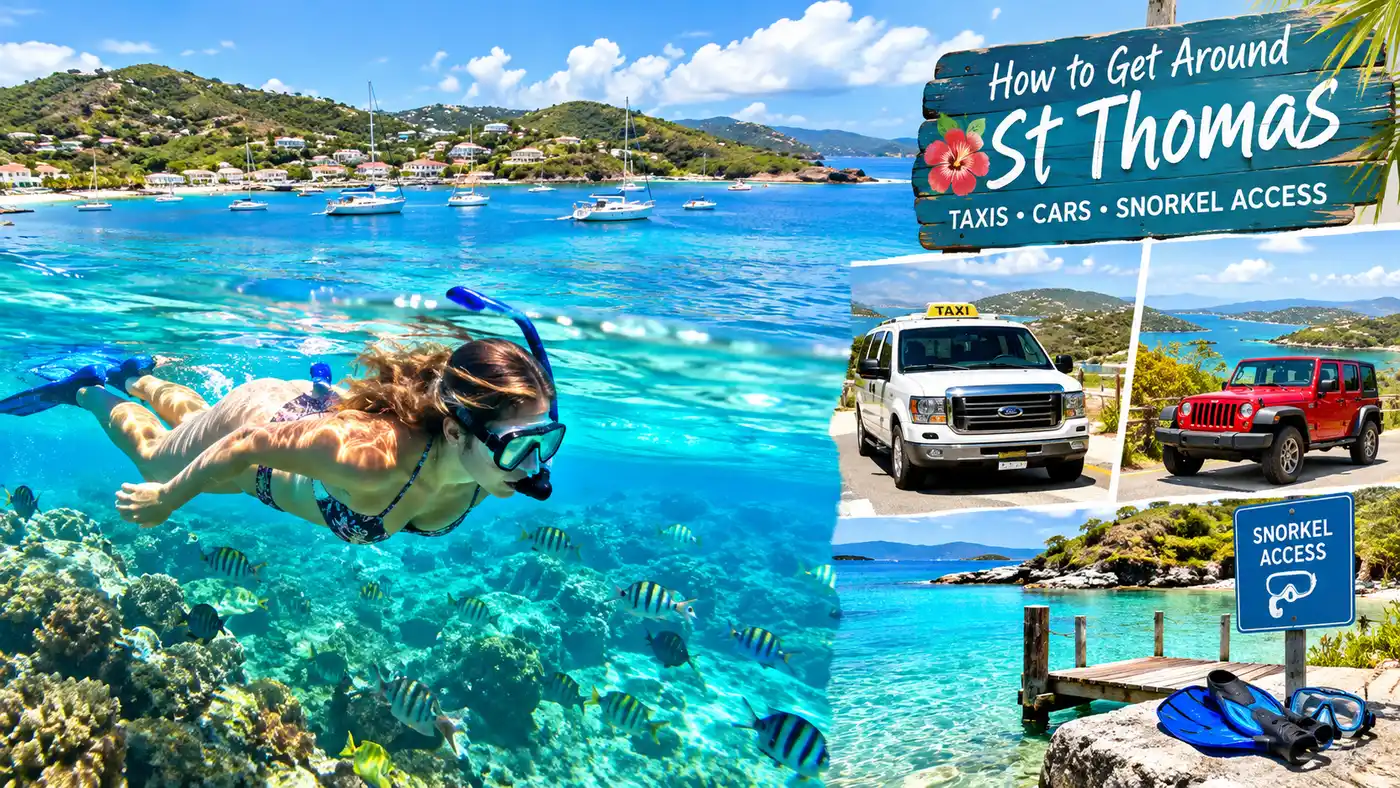
How to Get Around St Thomas Taxis Cars Snorkel Access
The first time you step off the plane at Cyril E. King Airport, the Caribbean heat hits your face alongside a wall of idling safari trucks and luggage carts. Figuring out how to get around st thomas usually comes down to a choice between renting a car to brave the mountain switchbacks or paying per person every time you step into a shared van. The island looks deceptively small on paper. It measures only about 13 miles long and four miles wide, yet getting from a harbor hotel out to an isolated coral reef can turn into an hour-long odyssey if you misjudge the terrain.
Every bay has its own personality, and reaching the best snorkel spots requires some logistical planning. Some reefs sit fifty yards from paved resort parking lots, while others hide at the bottom of 20-degree dirt inclines that swallow compact sedans whole. Whether you intend to hire drivers for the week or take the wheel yourself, getting around st. thomas comes with a unique set of unwritten rules.
Driving on the Left: Car Rentals and Mountain Switchbacks
Driving here is a mental workout. Vehicles drive on the left side of the road, yet almost every rental car on the island is a standard American import with the steering wheel also on the left. That puts you right against the curb instead of the center line, which feels unnatural for the first 25 minutes. You will probably reach for your seatbelt on the wrong side at least twice. Sticking a post-it note on the dashboard that says "Keep Left" sounds ridiculous until you make your first right turn onto a blind curve near Drake's Seat.
The roads climb fast. St Thomas is essentially the jagged spine of a drowned mountain chain, so routes like Crown Mountain Road pitch upward at brutal angles. Blind turns are frequent, and guardrails are mostly treated as decorative suggestions rather than guarantees. Local drivers will often tap their horn twice before swinging around a narrow rock bluff. That is not road rage. It is simply a friendly notice that a pickup truck is approaching fast around a curve that only fits one and a half vehicles.
Pro tip: Rent an all-wheel drive or compact SUV if your budget allows. Many residential gravel spurs leading down to quiet snorkel coves will spin the tires of a standard front-wheel sedan after an afternoon rain.
Gas is expensive, often hovering around $4.85 a gallon, though the island is small enough that you will rarely burn through a full tank in five days. Potholes can be crater-sized. If you hit one near Mahogany Run at 30 miles an hour, you will blow a tire, so keep your eyes glued to the pavement instead of the turquoise horizon. For travelers seeking complete freedom to hunt down morning reef conditions, booking a rental car remains the best way to get around st thomas.
Book your snorkeling in st thomas experience:
The St Thomas Cab System: Safari Trucks and Fare Realities
If driving on mountain ledges sounds stressful, taxis cover virtually every corner of the island. Most people do not realize that an open-air truck with bench seating in the back is often legally operating as an official st thomas cab. These modified pickup trucks - fitted with canvas canopies and padded bench rows - are known locally as safaris. They handle the bulk of transit between cruise ports, downtown Charlotte Amalie, and tourist hubs.
Cabs on St Thomas do not run on meters. Rates are strictly regulated by the Virgin Islands Taxicab Commission, based on a fixed zone-to-zone schedule per person. A solo trip from the airport to Red Hook on the East End might run roughly $24, but if you have three people with you, expect to pay around $17 per person plus $2 for each piece of luggage. Those per-head fees add up surprisingly fast for groups. When you hop into a cab with a family of four for a round-trip beach excursion, you might drop $120 before you even buy lunch.
Always negotiate or confirm the rate before placing your gear in the vehicle. Drivers are required by law to carry an official rate sheet, and you are entirely within your rights to ask to see it. Payment is mostly cash. A few drivers take mobile cash apps or cards, but expecting a card reader at a remote beach pickup is a recipe for getting stranded.
Note: Official licensed taxis have a dome light on the roof and "TP" on their license plates. Do not accept rides from unlicensed gypsy cabs that approach you outside the terminal exits.
Cell service can be spotty in the deep hollows around the north shore. If a driver drops you off at a quieter bay around 11:00 AM, arrange a firm pickup time for your return trip right then and there. Ask for their direct cell number. Drivers are usually happy to return for you if they know a guaranteed fare is waiting.
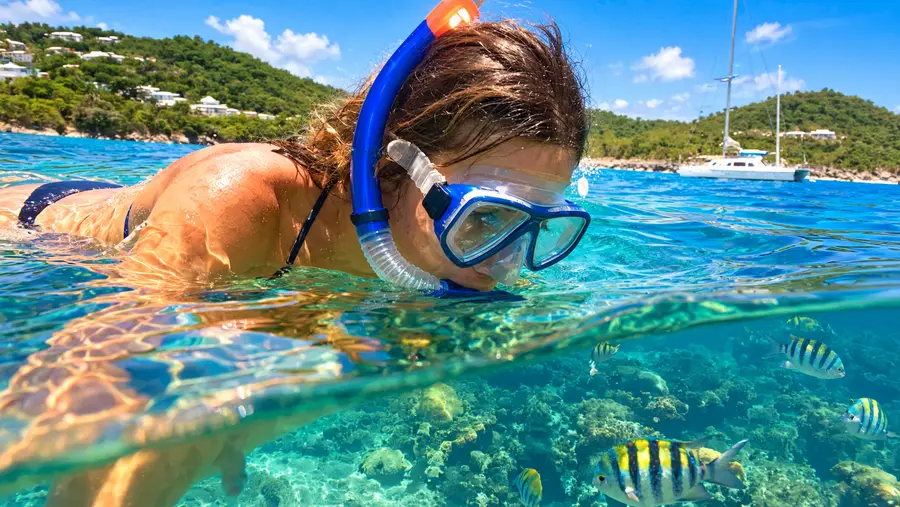
How to Get Around St Thomas Without a Car
Can you manage getting around st thomas without a car? Absolutely, provided you pick your home base with intention. If you stay on the East End near Red Hook, you can walk to restaurants, the ferry dock, and catch shared rides easily. Staying in a hillside villa without a vehicle, on the other hand, will leave you trapped or constantly waiting on costly taxi dispatches.
Budget travelers often rely on the local "Dollar Bus." These are safari trucks that drive a set circular route between Charlotte Amalie and Red Hook. They look almost identical to private tourist safari taxis, which leads to immense confusion for first-timers. The crucial difference is that the dollar bus picks up at marked bus stops and charges $1 within town or $2 for cross-island trips. Cash only, exact change preferred, paid directly to the driver when you disembark.
When you want to try getting around st. thomas on the cheap, keep these dollar bus practices in mind:
- Route awareness: The dollar bus circles the main artery between the Tutu Park Mall, downtown Charlotte Amalie, and Red Hook, but it does not descend steep side roads to isolated bays.
- Waving them down: Stand near a designated VITRAN stop and give a simple nod or wave as the safari approaches.
- Destination confirmation: Stick your head in the cab window and ask the driver where they are heading before you step onto the back bench.
- Luggage restrictions: Large suitcases and bulky coolers are rarely welcome on crowded dollar runs during peak commute hours.
The dollar bus will get you within a five-minute walk of Sapphire Beach, making it an incredible bargain for snorkelers carrying nothing more than a mesh gear bag and a towel. But do not rely on it for early-morning flight departures or late nights out, as the schedule tapers off quickly after sunset.
Book your snorkeling in st thomas experience:
Comparing Your Transit Options
Every method of transit on the island comes with trade-offs between cash, convenience, and nerves. Here is how the main options stack up for travelers trying to plan their days.
| Transit Method | Average Cost | Snorkel Access | Best Suited For |
|---|---|---|---|
| Rental Car | $75 to $115 per day | Direct access to remote and rugged coves | Independent explorers moving between multiple bays |
| Private Taxi | $12 to $30 per person per trip | Excellent for main beaches; limited on dirt roads | Couples and cruise visitors on short stays |
| Shared Dollar Safari | $1 to $2 per ride | Access to beaches along the primary highway only | Solo travelers packing light gear on a strict budget |
| VITRAN Public Bus | $1 flat fare | Poor; bus stops sit far from water access | Local commuters; rarely practical for vacationers |
Reaching the Best Snorkel Beaches Across the Island
Reaching the reefs requires different transit strategies depending on where the coral actually grows. If your plan is how to get around in st thomas to snorkel every day, you need to know which spots accommodate vehicles and which demand a walk.
Coki Point Beach has paved access right up to the sand, surrounded by dive shops and food vendors. Taxis idle outside Coki constantly, so getting back to your hotel from there is effortless. By contrast, Hull Bay on the north side offers incredible rocky reef snorkeling when the winter swell is flat, but taxis almost never sit waiting in the dirt lot. If you take a cab out to Hull Bay, you will need a solid return arrangement, or you will be walking up a very steep road asking bartenders for help.
Here is what to expect when driving or catching rides to the most popular shore snorkeling entry points:
- Secret Harbour: Tucked into a protected south-shore residential cove, accessible by paved roads with a small paved parking area that fills up by 10:30 AM.
- Coki Beach: Heavy taxi availability all day, narrow crowded access road, easy entry for beginners right off the main parking zone.
- Sapphire Beach: Generous paved parking area, short flat walk past the condos to the reef, easily reached via taxi or the $2 dollar safari.
- Lindquist Beach: Gated entry with a small county park fee, pristine shoreline, ample parking, but taxis will only pick you up here if scheduled in advance.
Would I want to hike two miles under the midday sun hauling fins, mask, and two liters of water just to save cab fare? No chance. If someone offered me a ride back up the hill from Brewers Bay in the bed of their truck, would I take it? Yes please, without hesitation. Island life moves at an easy pace, and locals are exceptionally kind if you show proper respect and greet them with a polite "Good morning" or "Good afternoon" before asking for directions.

Ferry Connections and Island Hopping Transit
Transit in St Thomas does not stop at the asphalt. Part of mastering how to get around st thomas without a car is knowing when to let boats handle the heavy lifting. The passenger ferry from Red Hook over to Cruz Bay on St John leaves every hour on the hour, costing $8.15 each way for adults and taking roughly 15 to 20 minutes.
Another overlooked water route runs out of Crown Bay Marina near Charlotte Amalie. From that dock, a small foot ferry runs across the channel to Honeymoon Beach on Water Island, taking roughly ten minutes. Once you step off the ferry dock at Phillips Landing, you can walk fifteen minutes over the hill or hop on a golf cart shuttle down to the bay to snorkel alongside green sea turtles feeding on the bottom grasses.
If you have rented a vehicle and want to explore the national park trails across the water, car barges operate out of Red Hook to St John as well. A round-trip barge ticket runs around $50 to $65 depending on the operator. Keep in mind that some St Thomas rental car agencies prohibit their cars from crossing on the barge, so read your contract small print carefully before rolling into the ferry slip.
Frequently Asked Questions about how to get around st thomas
Is Uber or Lyft available on St Thomas?
No, rideshare apps like Uber and Lyft do not operate on St Thomas. You will need to rely on licensed taxis, shared safari vans, rental cars, or private driver services.
Can I get around St Thomas without renting a car?
Yes, especially if you stay near Red Hook or Charlotte Amalie. Taxis are common, and the inexpensive dollar bus safari runs regular loops along the main eastern road, though reaching secluded beaches will require private cab arrangements.
What is the best way to get around in St Thomas for snorkeling gear?
Renting a vehicle is the best choice if you carry extensive snorkeling gear. It gives you the freedom to check multiple bays for calm water conditions and keeps your wet gear secured between stops without paying per-ride luggage surcharges.
Quick Reference
- Drive on the left side of the road with standard US cars
- Dollar safari buses cost $1 to $2 along main routes
- Taxis charge fixed rates per person, not metered rates
- Uber and Lyft do not operate anywhere on the island
- Red Hook passenger ferry departs hourly for St John
Book your snorkeling in st thomas experience:
The Bottom Line
Navigating St Thomas comes down to your personal appetite for adventure versus convenience. If you feel confident hugging the left shoulder on blind mountain switchbacks, renting an SUV gives you total access to hidden snorkeling bays and panoramic outlooks on your own schedule. If mountain roads sound like an unnecessary vacation headache, plant yourself near Red Hook, keep plenty of small cash bills in your pocket, and let the local safari drivers handle the hairpin turns while you enjoy the scenery.
Read more about snorkeling in st thomas.