St Thomas vs St John Which Island Has Better Snorkeling
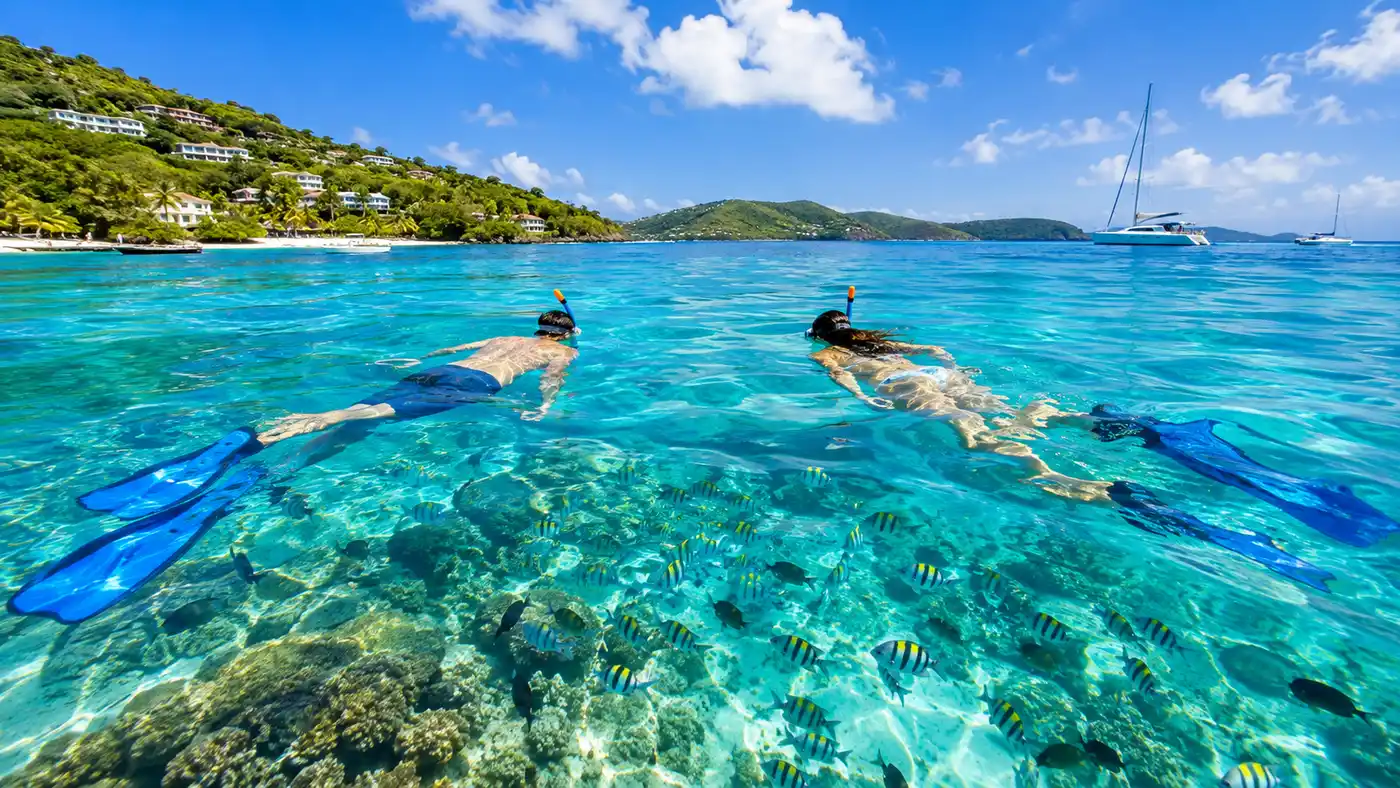
People argue about st john vs st thomas constantly on island ferries and Reddit forums, usually while clutching a rum drink and nursing a shoulder sunburn. I have spent weeks floating face-down in the bays of both islands, and the truth is that they deliver completely different experiences beneath the surface. St Thomas gives you easy road access, beach bars steps from the sand, and rocky points loaded with reef fish. St John, on the other hand, throws protected national park waters, massive sea fans, and sprawling seagrass beds right into your lap.
Deciding between them comes down to what you actually want out of your morning in the water. Are you trying to step out of a rental Jeep, grab a taco, and immediately drift over a stingray? Or do you want to hike a dirt trail with your fins strapped to a backpack just to reach an offshore cay ringed by purple seafans and nurse sharks? Both islands have spots that will ruin home-aquarium keeping for you forever, but one has a distinct edge when it comes to intact marine ecosystems.
Book your snorkeling in st thomas experience:
The Big Picture: St Thomas vs St John for Reef Health and Underwater Life
Virgin Islands National Park covers roughly 60 percent of St John. Laurence Rockefeller bought up thousands of acres in the 1950s and handed them to the federal government, which turned out to be the best thing that ever happened to the local coral. Because commercial development stops at the park boundary, runoff is minimal. Rain hits dirt and thick forest instead of paved shopping plazas, so the water along the north shore stays astonishingly clear even after an afternoon squall. If healthy brain corals and expansive elkhorn thickets are your priority, st john versus st thomas is barely a fair fight - St John takes the prize without breaking a sweat.
St Thomas took the opposite path. It developed hard, welcoming cruise ships, condo towers, and marina infrastructure. That heavy shore development means you will notice more algae on the rocks and fewer sprawling reef crests right off the busiest resorts. Still, marine life adapts in weird ways. The rocky peninsulas flanking St Thomas bays act like magnets for pelagic fish, rays, and squid. You get dense pockets of wildlife tucked into unexpected corners, even if the surrounding reef looks a bit tired.
Water clarity shifts throughout the week depending on cruise ship traffic and harbor churn. On St Thomas, bays near Charlotte Amalie or Crown Bay can turn murky when four cruise liners depart at 5:00 PM, churning up the harbor bottom. St John does not take large cruise ships. Cruz Bay receives passenger ferries and private yachts, leaving places like Leinster Bay and Francis Bay glassy and bright almost every morning.
Pro tip: Check the St Thomas cruise port schedule online before planning your snorkel days; visiting St John on days when five ships sit in Charlotte Amalie will save you from sharing Trunk Bay with 400 tour-bus passengers.
Snorkeling St John: Pristine Bays and Shore Accessibility
Snorkeling St John feels untamed in the best way. You drive a bouncy rental Jeep along Route 20, weave through switchbacks populated by wild donkeys, and pull off into dirt bays where the tree canopy drops down to the tideline. The most famous stop is Trunk Bay. Yes, it has an underwater snorkel trail with submerged plaques explaining coral species, and yes, it gets crowded by 10:30 AM. But swim out around the western cay, past where the casual swimmers stop, and you will find deep underwater crevices holding lobsters, French angelfish, and spotted eagle rays gliding over 18 feet of white sand.
Maho Bay is where you go when you want a sea turtle encounter without swimming half a mile offshore. The bay is shallow and calm, protected by two long headlands that knock down incoming swell. The bottom is a vast lawn of seagrass, which acts like an all-you-can-eat salad bar for juvenile green turtles. On my last visit, I counted 11 turtles feeding within 40 yards of each other in chest-deep water. They surface for air every few minutes, look at you with total indifference, and dive back down to chew grass. If you want calmer, less populated waters, keep walking east to Francis Bay. Francis has a long, quiet beach where pelicans dive-bomb schools of dwarf herrings while lemon sharks and southern stingrays cruise the shallows.
Then there is Waterlemon Cay. Getting there requires parking at the Annaberg Sugar Mill ruins, walking a flat, 20-minute dirt trail along the edge of Leinster Bay, and swimming about 150 yards out to a small rocky islet. It requires effort. It also offers the absolute best snorkeling in st thomas and st john combined. The current wraps around the outer edge of the cay, sweeping in clean Atlantic water that feeds immense fields of brain coral, mustard hill coral, and sea plumes. You will likely spot green moray eels, barracuda hovering motionless like silver pipes, and occasionally a nurse shark tucked under a rock ledge.
Note: Currents along the backside of Waterlemon Cay can run fast toward the British Virgin Islands; stick to the inner reef shelf if you are not a confident swimmer with long fins.
St Thomas Snorkel Spots: Convenience and Hidden Pockets
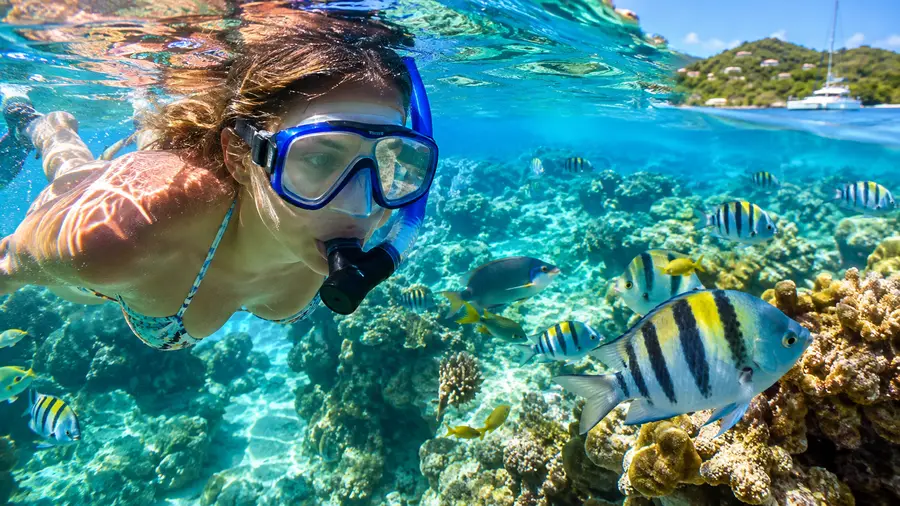
Do not write off St Thomas just because it has more concrete. The island has dozens of small coves where volcanic rock formations tumble directly into the Caribbean Sea, creating ideal hideouts for reef creatures. Coki Point Beach is the classic example. The reef along the rocky right-hand side has been a marine attraction for decades. Fish here are ridiculously bold because tourists have fed them dog biscuits and peas for forty years. Swim five yards out and you will be surrounded by dozens of sergeant majors, yellowtail snappers, and parrotfish inspecting your mask straps. It feels more like swimming in an open-ocean aquarium than a wild reef, which makes it fantastic for nervous swimmers and children.
Sapphire Beach offers a completely different vibe on the eastern end of St Thomas. The beach looks directly out toward St John and the offshore cays. Snorkel out along the rocky ledge on the right, and the bottom falls away into coral gullies teeming with tangs, doctorfish, and queen triggerfish. On breezy days, the wind pushes chop across the reef flat, but early mornings are usually calm and crystal clear. Secret Harbour is another quiet contender. Tucked into a protected inlet on the south shore, its waters rarely have any waves at all. The rocky ledges bordering the resort house juvenile octopuses, needlefish skimming the surface, and occasional stingrays resting on the sandy floor.
For those wondering where to swim with sea turtles in St Thomas, Brewers Bay is the island's best-kept secret. Located past the University of the Virgin Islands campus, right near the airport runway, Brewers has murky-looking sand near the shore that scares tourists away. Swim past the shore break into 8 to 12 feet of water, though, and you enter a massive seagrass meadow. You will regularly share the water with green turtles and huge southern stingrays that measure 4 feet across. It lacks the picture-postcard palm trees of St John, but the marine life is undeniably impressive.
Book your snorkeling in st thomas experience:
Comparing the Details: St Thomas Versus St John Side by Side
When travelers ask whether st thomas or st john is better for an underwater trip, the answer depends on their comfort with logistics. St Thomas allows you to park 15 feet from the water, rent gear from a beach shack, and order a mahi-mahi sandwich without ever taking off your rash guard. St John demands more walking, packing your own water jugs, and navigating car ferry schedules. The table below lays out how the two islands stack up across the factors that matter most to snorkelers.
| Factor | St Thomas | St John |
|---|---|---|
| Reef Health & Coral Density | Moderate; concentrated around outer points | High; protected national park waters |
| Sea Turtle Sightings | Excellent at Brewers Bay and Buck Island | Exceptional at Maho and Francis Bays |
| Shore Access & Amenities | Restrooms, beach bars, and gear rentals on site | Minimal; many beaches lack running water or shops |
| Crowd Levels at Top Spots | Heavy around midday; lots of cruise excursions | Moderate; dispersed across wide national park beaches |
| Water Clarity Average | 40 to 65 feet depending on harbor ship traffic | 60 to 90 feet along the north shore coves |
| Transportation Cost to Beaches | $10 - $16 taxi per person or simple car rental | $8.15 passenger ferry plus $7 - $15 safari taxi |
The differences become stark once you put your head underwater. On St Thomas, you see plenty of fish, but you also see dead coral skeletons covered in turf algae, discarded beverage cans wedged into rocks, and boat moorings cutting through fragile seabed. On St John, the reef formations look three-dimensional. You see thick pillars of star coral, undulating purple sea fans that span 3 feet across, and cleaner sand flats free of motorboat wake.
Logistics and Cost: Is St John or St Thomas Better for a Day Trip?
If you are based on St Thomas, hopping over to St John for snorkeling is simple, but the costs add up quickly for a family. You have two main ferry choices leaving from the Red Hook terminal on the east end of St Thomas. The passenger ferry runs every hour on the hour, takes about 20 minutes to reach Cruz Bay, and costs $8.15 each way per adult, plus $4 per bag if you have large gear duffels. The car barge runs roughly every 30 minutes, costs around $53 round-trip, and lets you take your St Thomas rental car straight across, though you should check your rental agreement first since some agencies prohibit barge travel.
Once you dock in Cruz Bay without a car, you will rely on open-air safari taxis. These converted pickup trucks operate on set per-person fares regulated by the Virgin Islands Taxicab Commission:
- Cruz Bay to Trunk Bay: costs around $9 per person each way, plus an additional $5 park entry fee at the gate.
- Cruz Bay to Maho Bay: runs about $13 per person each way, dropping you directly at the roadside seagrass beds.
- Cruz Bay to Salt Pond Bay: roughly $19 per person each way; you must arrange a strict pickup time with your driver because cell service is practically nonexistent on the south shore.
Renting gear on St Thomas is easier and generally cheaper. Rental shacks sit right on Coki, Sapphire, and Secret Harbour beaches, charging around $15 to $20 for a mask, snorkel, and fin set for the day. On St John, you either need to rent gear in Cruz Bay near the ferry dock before heading out, or stop at Cinnamon Bay or the commercial truck across from Maho Bay. If you plan to snorkel three or more days, buy a decent silicone mask and snorkel at home before your flight. Rental gear in the islands gets rinsed in buckets of lukewarm water between users and leaks more often than it should.
Pack your own reef-safe sunscreen. The US Virgin Islands strictly bans sunscreens containing oxybenzone, octinoxate, and octocrylene to protect fragile coral tissue. Local enforcement is real, and retail stores in both Red Hook and Cruz Bay charge $18 to $24 a bottle for mineral-based zinc oxide formulas that sell for half that on the mainland.
Frequently Asked Questions about st john vs st thomas
Is St Thomas or St John better for beginner snorkelers?
St Thomas is slightly better for total beginners because beaches like Secret Harbour and Coki Point have calm, zero-depth entry waters with lifeguards, rental shacks, and restrooms right on the sand. On St John, Maho Bay is also wonderfully calm, but amenities are sparser if you get uncomfortable or need gear adjusted.
Can I see sea turtles on both islands?
Yes. Maho Bay on St John is world-famous for green sea turtles grazing in shallow seagrass just yards from the road. On St Thomas, Brewers Bay has a large resident turtle population that feeds along the sandy drop-offs, often with far fewer tourists watching them.
Which is better St Thomas or St John if I don't want to rent a car?
St Thomas is easier without a car if you stay at a beach resort with an offshore reef like Sapphire or Secret Harbour. On St John, staying without a car means paying high per-person taxi fares every time you want to travel from Cruz Bay to the north shore beaches.
Quick Reference
- St John wins on reef health and water clarity due to national park protections.
- St Thomas wins on convenience, beachside food, and equipment rentals.
- Best turtle bay: Maho Bay (St John) or Brewers Bay (St Thomas).
- Passenger ferry from Red Hook to Cruz Bay takes 20 minutes and costs $8.15 each way.
- Mineral sunscreen only: chemical sunscreens are illegal across the USVI.
Book your snorkeling in st thomas experience:
My Take
If your entire Caribbean vacation revolves around wildlife, healthy reefs, and feeling like you are exploring an undisturbed corner of the planet, St John is the clear winner. There is simply no comparison between the marine life surrounding Waterlemon Cay and the trampled coral flats of urbanized bays. Take the early morning ferry from Red Hook, pack a cooler with water and lunch, rent a Jeep, and spend your days drifting along the north shore. You will walk away with memories of spotted eagle rays, nurse sharks, and wild sea turtles that make the extra travel logistics completely worthwhile.
Read more about snorkeling in st thomas.